
The skeleton emoji 💀 is commonly used to represent a skeleton, death, Halloween, horror, or something dark. But in everyday texting and social media, 💀 often means “I’m dead” from laughter, embarrassment, shock, or disbelief rather than literal death. Unicode officially identifies 💀 as “skull,” not “skeleton,” although people often call it the skeleton emoji because of how it looks. (Unicode)
Thank you for reading this post, don't forget to subscribe!If someone sends you 💀 after a joke, they usually aren’t talking about death. They may be saying something like “That was so funny I’m dead” or “I cannot believe you just said that.” Its meaning depends heavily on the conversation and the relationship between the people using it.
This guide explains what 💀 means in texting, friendships, relationships, social media, and different everyday situations. It also explains the official name, Unicode information, common misunderstandings, and how 💀 differs from ☠️.
The emoji 💀 officially represents a skull, but it is frequently called the skeleton emoji in everyday conversation. Unicode lists it as U+1F480, with the short name “skull.” (Unicode)
Its meaning can change depending on context.
Common meanings include:
- “That is extremely funny.”
- “I’m dead laughing.”
- Shock or disbelief
- Embarrassment
- Death or danger
- Halloween or spooky themes
- Dark humor
- A creepy or frightening situation
For example:
Friend: “I accidentally waved back at someone who wasn’t waving at me.”
You: “💀”
Here, 💀 probably means “That is painfully embarrassing/funny.”
The emoji can also have a literal meaning. Someone discussing Halloween, horror movies, death, or skeletons might use it in its more obvious sense.
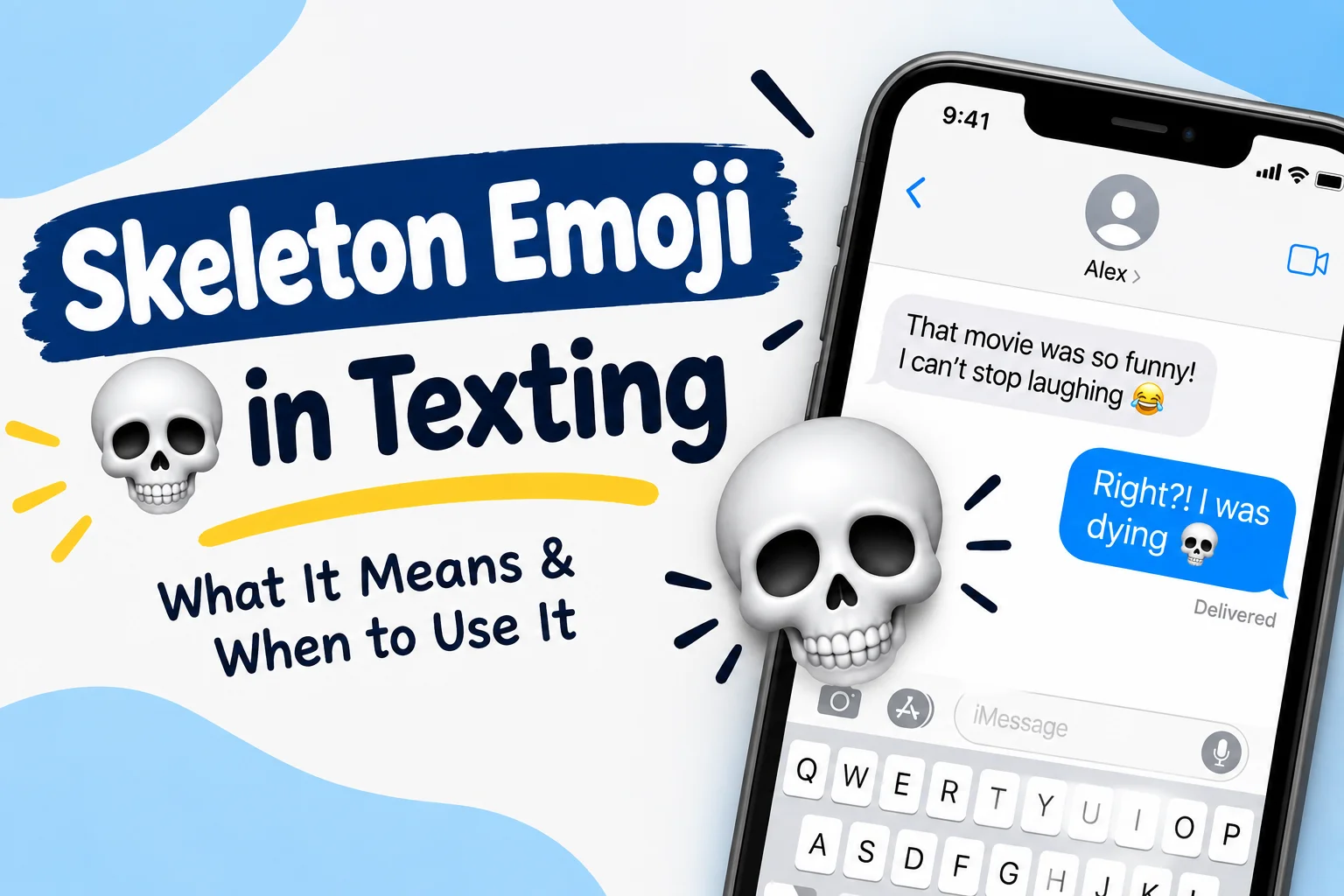
In texting, 💀 is often an exaggerated reaction rather than a literal reference to death.
For example:
Friend: “I studied for five hours and the exam was only two questions.”
You: “💀”
This can communicate “I can’t believe that” or “That’s terrible.”
Another example:
Friend: “He called me by his ex’s name.”
You: “💀”
Here, the emoji could express shock, awkwardness, or disbelief.
The surrounding words matter. Unicode itself notes that an emoji’s character name does not define every possible meaning, and emoji meanings can extend beyond their official names. (Unicode)
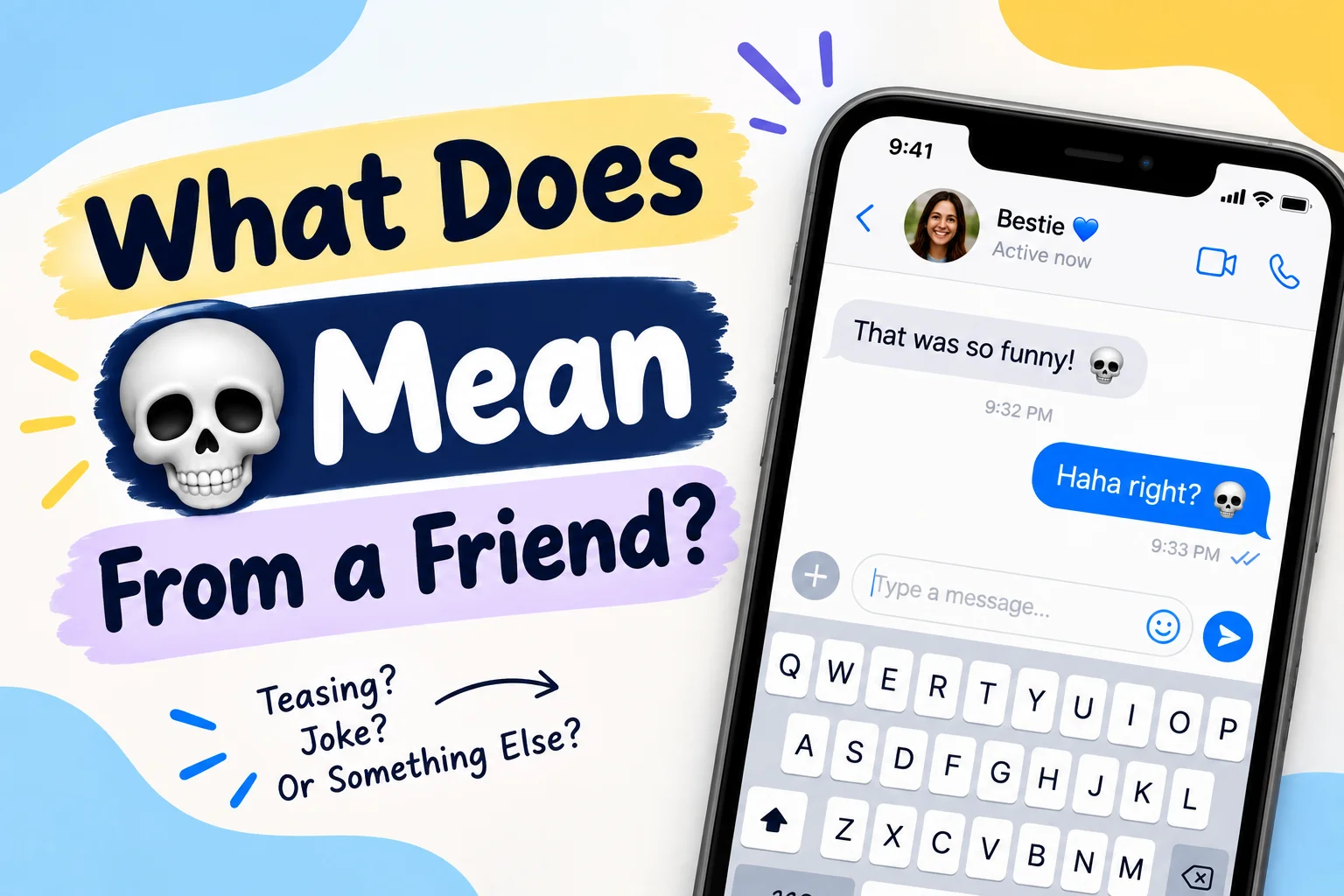
When a friend sends 💀, it commonly means:
“That’s hilarious,” “I can’t believe this,” or “You killed me with that.”
For example:
You: “I just walked into the wrong classroom and sat down.”
Friend: “💀💀💀”
Your friend probably isn’t suggesting anything serious. They’re reacting strongly to the funny or embarrassing situation.
💀 From a friend can mean:
| Situation | Possible meaning |
|---|---|
| After a joke | “That is hilarious.” |
| After an embarrassing story | “I can’t believe that happened.” |
| After surprising news | “I’m shocked.” |
| During dark humor | “That’s dark/funny.” |
| During Halloween | “Spooky/skull/skeleton.” |
The exact interpretation depends on the conversation.
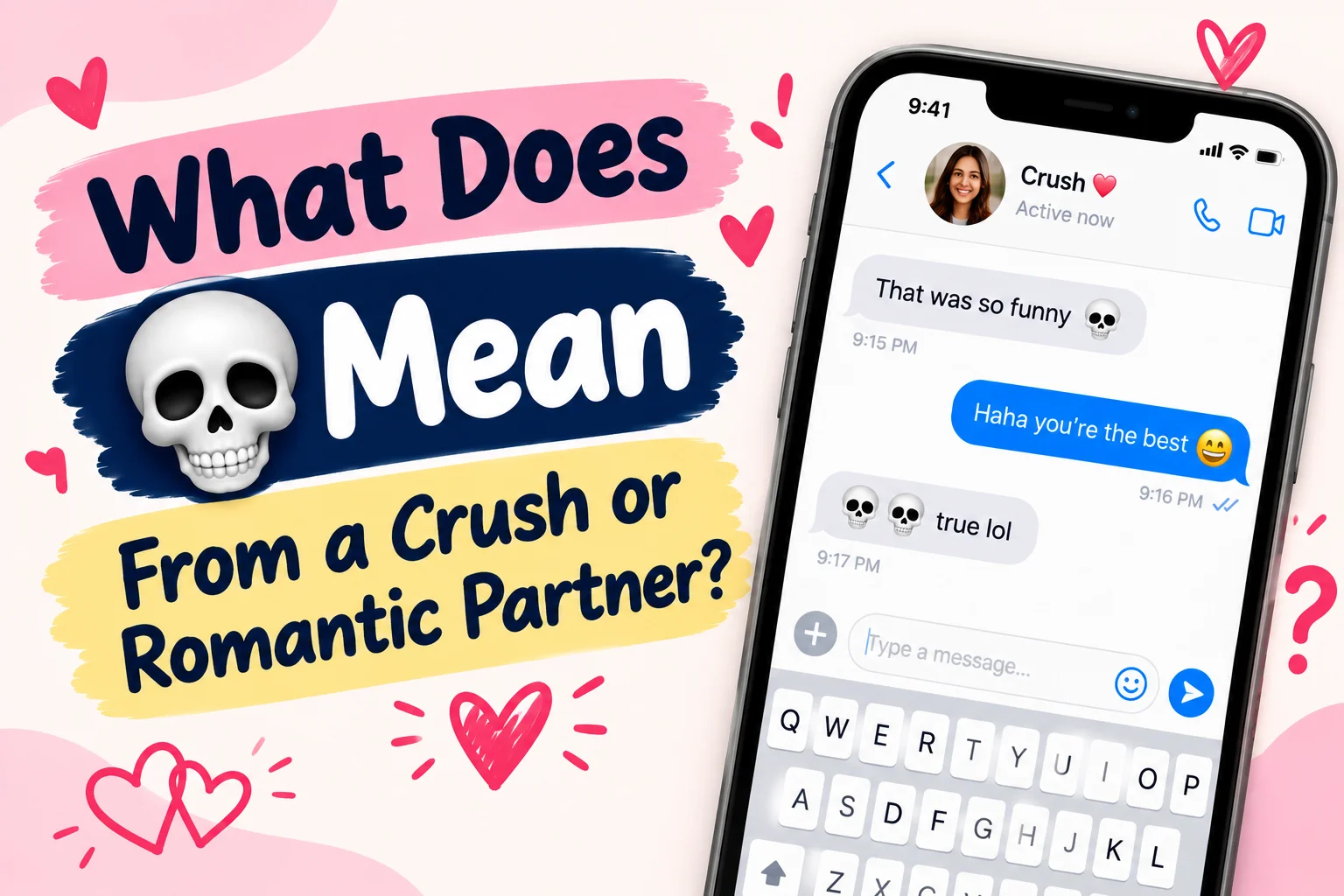
If a crush or partner sends 💀, it doesn’t automatically have a romantic meaning.
They might simply be laughing hard:
You: “I practiced saying hello to you and then completely forgot how to speak.”
Crush: “💀”
Here, 💀 can mean “That’s hilarious” or “You’re so funny.”
A romantic meaning usually comes from the whole conversation, not from the emoji alone.
For example:
You: “You looked really good today.”
Them: “Stoppp 💀”
Depending on the relationship and tone, this could indicate embarrassment, playful awkwardness, or amusement.
So if you’re wondering whether 💀 means “I like you,” there is no universal rule. Look at the surrounding messages and the person’s normal texting style instead.
💀 Meaning on Social Media
On Instagram, TikTok, X, Facebook, and other social platforms, 💀 is frequently used as a reaction to something funny, unexpected, awkward, or ridiculous.
You might see comments such as:
“The last part 💀”
This usually means:
“The last part was hilarious.”
Another common use is:
“Why did he actually do that 💀”
This can express disbelief or amusement.
People may also combine it with other emojis:
- 😂💀 — extremely funny
- 😭💀 — overwhelmed or laughing hard
- 💀😭 — humorous disbelief or emotional reaction
- 💀🤣 — something is very funny
- ☠️💀 — dark, dangerous, or exaggerated death imagery
These combinations are informal and can vary between online communities.
Real-Life Skeleton Emoji Conversations
Here are some illustrative examples showing how 💀 can change meaning depending on context.
With Friends
Friend: “I just called my teacher ‘Mom.’”
You: “💀”
Meaning: That’s extremely embarrassing or funny.
In a Group Chat
Friend: “Who ate the last slice of pizza?”
Another friend: “Not me 💀”
Meaning: This could be playful or joking, depending on the conversation.
After a Funny Video
Friend: “Watch this 😂”
You: “💀💀”
Meaning: The video is extremely funny.
After Bad News
Friend: “The concert got canceled.”
You: “💀”
Meaning: Shock, disappointment, or disbelief.
Around Halloween
Friend: “What are you dressing up as?”
You: “Skeleton 💀”
Meaning: Here, the emoji is being used literally in connection with a skeleton/Halloween theme.
These examples are illustrative; the same emoji can communicate different things in different conversations.
Skeleton Emoji 💀 vs. Skull and Crossbones ☠️
The emojis 💀 and ☠️ look similar, but they aren’t the same.
| Emoji | Official name | Common associations |
|---|---|---|
| 💀 | Skull | Death, humor, shock, embarrassment, Halloween |
| ☠️ | Skull and Crossbones | Danger, poison, pirates, death, hazardous themes |
Unicode identifies 💀 as “skull” and ☠️ as “skull and crossbones.” (Unicode)
Emojipedia notes that their applications can sometimes overlap, but they have distinct designs and associations. (Emojipedia)
For example:
“That joke killed me 💀”
is a common humorous use.
But:
“Warning: poisonous substance ☠️”
has a much more literal danger-related meaning.
Why Do People Call 💀 the “Skeleton Emoji”?
The official Unicode name is “skull,” not “skeleton.” (Unicode)
People commonly call it the skeleton emoji because the image depicts a human skull and is strongly associated with skeletons, Halloween, and death.
This is an example of why an emoji’s everyday name and official Unicode name aren’t always identical. Unicode explains that character names serve as identifiers and don’t necessarily cover every meaning or interpretation an emoji can have. (Unicode)
The History of the 💀 Emoji
The 💀 emoji has been around for much longer than many modern emojis.
According to Emojipedia, the skull design appeared in early Japanese emoji sets, including SoftBank in 1999. It was later approved for Unicode as U+1F480 in Unicode 6.0, released in 2010, and added to Emoji 1.0 in 2015. (Emojipedia)
Today, the emoji has both literal and figurative uses. Its modern internet usage is particularly notable because people frequently use it to express laughter, shock, embarrassment, or an exaggerated reaction rather than actual death.
Common Misunderstandings About 💀
1. 💀 Always means death
Not necessarily.
In casual texting, it often expresses laughter, shock, or embarrassment.
2. 💀 Has one secret meaning
It doesn’t.
Emoji meanings depend on context, relationship, culture, and the surrounding message. Unicode specifically warns against treating an emoji’s official character name as its complete meaning. (Unicode)
3. 💀 Is always negative
Not necessarily.
Someone can use it after something extremely funny:
“I can’t stop laughing 💀”
In that situation, the emoji is playful rather than threatening.
4. 💀 and ☠️ are identical
They are different Unicode emoji characters. 💀 is skull, while ☠️ is skull and crossbones. (Unicode)
When Should You Use the Skeleton Emoji?
💀 works especially well in casual conversations when you want to show:
- Strong amusement
- Shock
- Embarrassment
- Disbelief
- Dark humor
- Halloween or spooky themes
- A dramatic reaction
It’s generally best suited to informal communication.
For a professional email, formal announcement, or serious conversation about death, using 💀 could easily create the wrong impression.
FAQs About the Skeleton Emoji 💀
What does the skeleton emoji 💀 mean?
💀 officially represents a skull, but in everyday texting it can express laughter, shock, embarrassment, disbelief, death, Halloween, or dark humor. The exact meaning depends on context. (Emojipedia)
What does 💀 mean in texting?
In casual texting, 💀 often means “I’m dead” from laughter, similar to saying something is extremely funny. It can also express shock or embarrassment.
What does 💀 mean from a girl?
There isn’t one special meaning based on gender. A girl may use 💀 to show laughter, shock, embarrassment, disbelief, or another reaction depending on the conversation.
What does 💀 mean from a guy?
The same basic principle applies. A guy may use 💀 as a humorous reaction, to express disbelief, or to refer literally to death or something spooky.
Does 💀 mean “I’m dead”?
Sometimes, especially online. In slang, it can mean “I’m laughing so hard” or “That is hilarious.” It doesn’t necessarily mean literal death.
Is 💀 a skeleton or skull emoji?
Its official Unicode name is “skull.” People often call it the skeleton emoji because the image represents a human skull and is associated with skeletons. (Unicode)
What’s the difference between 💀 and ☠️?
💀 is officially Skull, while ☠️ is Skull and Crossbones. Both can relate to death, but ☠️ is more strongly associated with danger, poison, pirates, and hazardous imagery. (Emojipedia)
Final Takeaway
The skeleton emoji 💀 is officially called the Skull emoji, but its everyday meaning goes far beyond death. In casual texting and social media, it is often used as an exaggerated reaction to something hilarious, embarrassing, shocking, or unbelievable. It can essentially communicate “I’m dead,” “That killed me,” or “I can’t believe this.”
At the same time, 💀 can still have its more literal associations with death, skeletons, Halloween, horror, and spooky subjects. The difference comes from the context.
If a friend sends “💀” after telling a funny story, they’re probably laughing. If someone uses it alongside Halloween content, they may simply be referring to skulls or skeletons. And if it appears in a conversation about danger or death, the meaning may be more literal.
The safest way to interpret 💀 is to look at the message around it, the relationship between the people, and the overall tone of the conversation rather than assuming the emoji has one fixed meaning.